
Yoga for Tight Hips: 9 Essential Poses to Improve Mobility
Tight hips can restrict movement through the pelvis and contribute to discomfort in the lower back and legs. This class introduces nine essential yoga poses designed to release tension and restore mobility, helping you move with greater ease and stability.
Tightness in the hips is one of the most common sources of restriction in the body. Long periods of sitting, limited movement, and repetitive daily habits can gradually reduce flexibility in the muscles surrounding the hip joints. As this restriction develops, its effects are often felt more widely, particularly in the lower back, pelvis, and knees.
Yoga offers an effective and practical way to restore balanced movement in this area. By working with poses that target the inner thighs, gluteal muscles, hip flexors, and deep hip rotators, it is possible to gradually improve flexibility while also supporting more efficient movement in everyday activities.
The class below features nine essential poses that address these key areas. It includes poses to open the adductors, lunging variations that work with the hip flexors, and reclining poses that help release tension through the outer hips and gluteals. Together, these poses create a well-rounded approach to improving hip mobility.
Particular attention is also given to the piriformis and deep hip rotators, which can become tight through prolonged sitting. Releasing tension in this region can help reduce pressure around the back of the hips and support a greater sense of freedom through the pelvis and legs.
Suitable for both beginners and more experienced practitioners, this class demonstrates how yoga props such as blocks, blankets, and chairs can be used to adapt each pose. Practiced regularly, this sequence can form a reliable foundation for maintaining comfort, mobility, and ease of movement in the hips.
Free Class: Yoga for Tight Hips
This free class features a complete sequence of nine essential yoga poses for tight hips. It is designed to help release tension in the muscles around the hips while improving mobility through the pelvis and legs.
Press play to follow the full sequence, then scroll down for detailed instructions for each pose.

Improve Hip Mobility with Structured Iyengar Yoga
Continue your hip mobility journey with the full Yoga for Hips course.
These carefully structured classes help you release tight hips, improve flexibility, and restore balanced movement through the pelvis and legs with clear, methodical instruction.
Your membership includes full access to this course, over 900 on-demand classes, and Yoga Selection’s complete library of structured yoga courses.
Clear Instruction. Intelligent Sequencing. Iyengar Yoga for Every Body.
Table of Contents
Table of Contents
- Free Class: Yoga for Tight Hips
- The 9 Essential Yoga Poses for Tight Hips
- Pose 1 — Parsvakonasana (Extended Side Angle Pose)
- Pose 2 — Eka Pada Rajakapotasana II (Pigeon Pose – Hip Flexor Lunge)
- Pose 3 — Gomukhasana Preparation (Cow Face Pose – Hip Stretch)
- Pose 4 — Malasana (Supported Squat for Inner Groins)
- Pose 5 — Baddha Konasana (Bound Angle Pose)
- Pose 6 — Upavistha Konasana (Wide-Angle Seated Pose)
- Pose 7 — Chair-Supported Pigeon Pose (Piriformis Stretch)
- Pose 8 — Reclining Figure Four Pose (Supine Piriformis Stretch)
- Pose 9 — Eka Pada Rajakapotasana (Pigeon Pose)
- Want to Go Further? A Complete Yoga Course for Hip Mobility
- Class 1: Yoga for Hips
- Class 2: Glutes and Piriformis
- Class 3: Adductors
- Class 4: Reclining Yoga Poses
- Class 5: Yoga for Tight Hip Flexors
- Class 6: Yoga for the Gluteals
- Class 7: Vinyasa Hips and Twists
- Class 8: Yoga for the Piriformis Muscle
- Class 9: Legs and Pelvis Mobility
- Class 10: Padmasana (Lotus Pose)
- Frequently Asked Questions
The 9 Essential Yoga Poses for Tight Hips
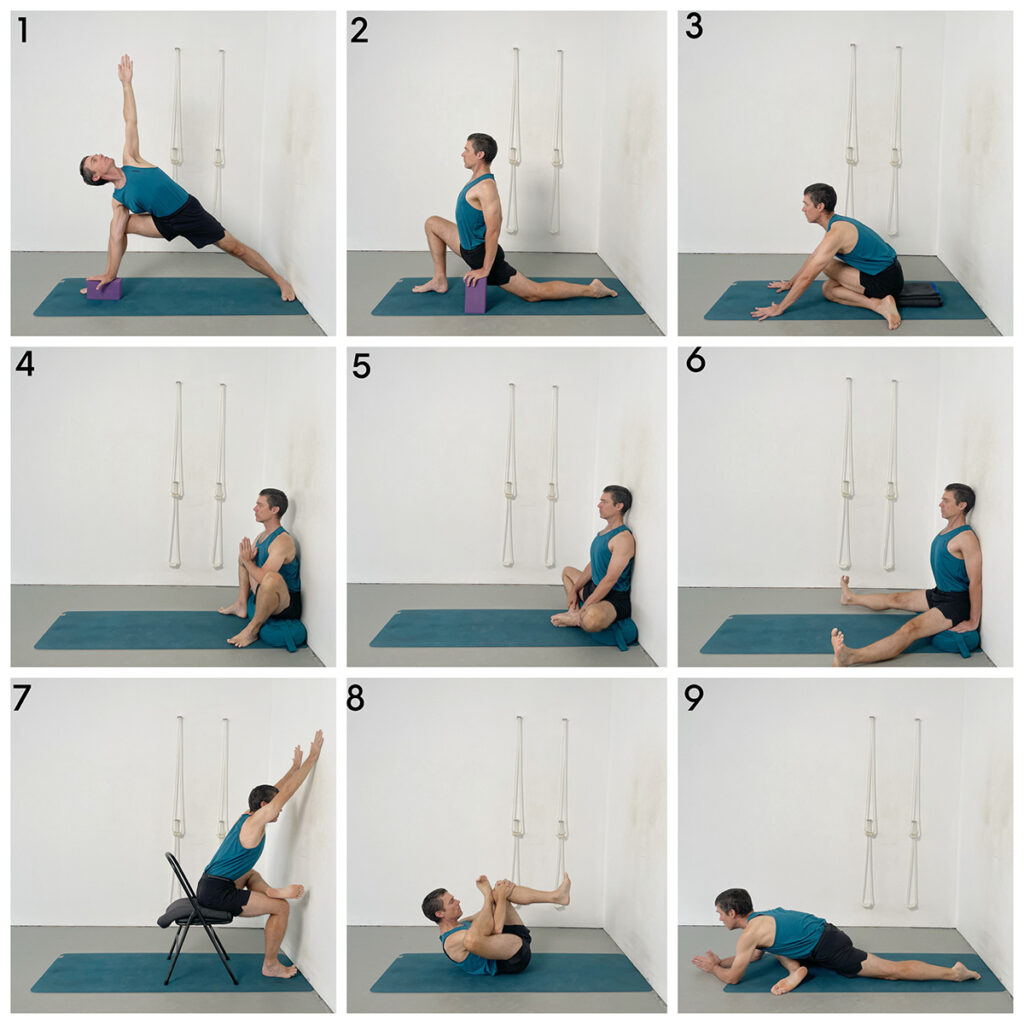
These nine poses form a complete sequence for improving mobility in tight hips. Each pose targets a specific area around the hip joint, including the inner thighs, gluteals, hip flexors, and deep rotators, helping to restore balanced movement through the pelvis and legs.
Scroll through the poses below to see the full sequence, then follow the step-by-step instructions for each pose.
1. Parsvakonasana (Extended Side Angle Pose)
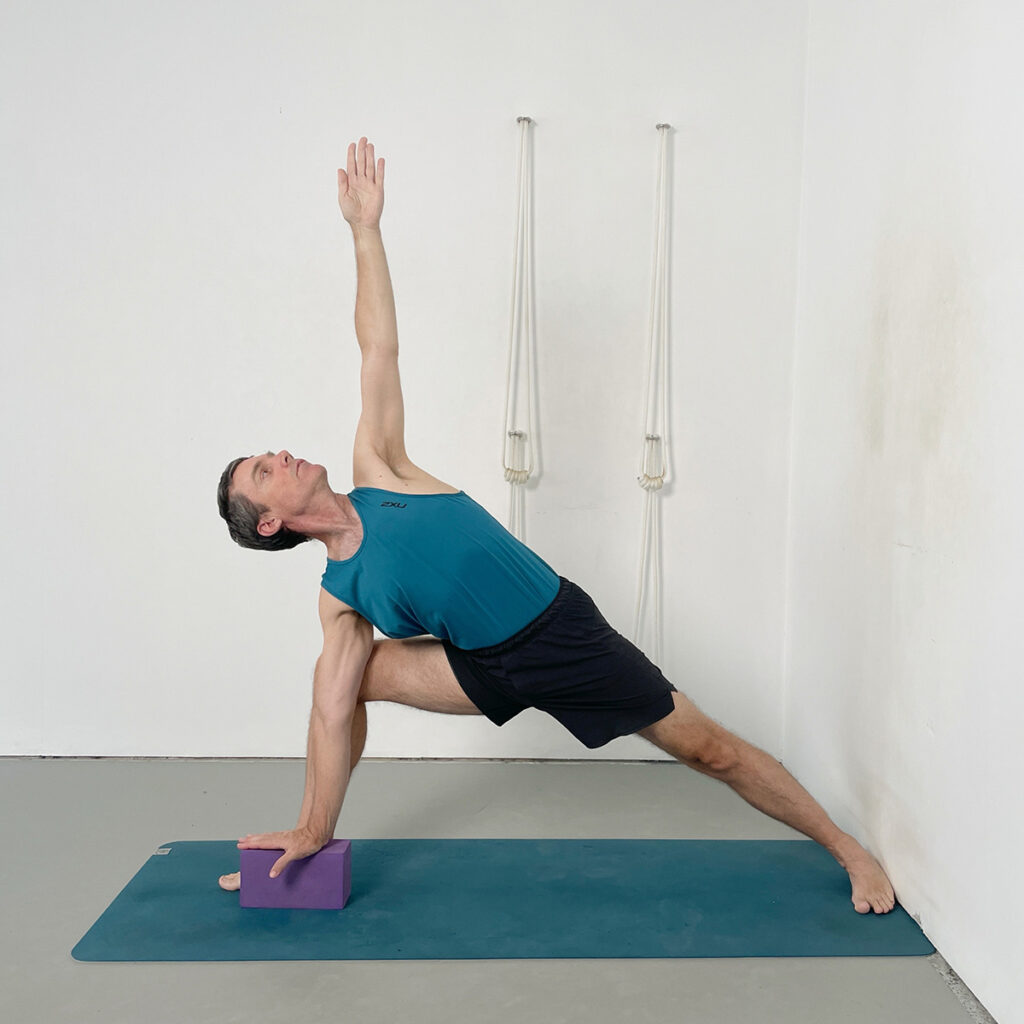
Parsvakonasana is an excellent standing pose for improving hip mobility and creating space through the inner groins. In this variation the lower arm is placed to the inside of the bent leg, with the hand supported on a block. This positioning allows the arm to brace the knee so that the front hip can open more effectively. The wall support helps to stabilise the back leg, allowing the hips and pelvis to work more precisely as the pose develops.
Key Instructions
• Stand with your back heel against the wall and step the front foot out to a wide distance.
• Bend the front knee so that it aligns directly over the ankle.
• Place a block beside the inner heel of the front foot and bring the lower hand down onto the block.
• Position the arm firmly against the inner knee to stabilise the knee and keep it aligned over the ankle.
• Ground the front heel and allow the front thigh bone to descend, bringing the hip socket towards the height of the knee.
• Stabilise the back leg by pressing the back heel into the floor and firming the back thigh.
• Cotain the buttock of the front leg and draw the outer hip deeper into the body to encourage hip opening.
• Turn the chest upward, rotating the upper torso away from the front leg.
• Extend the top arm vertically above the shoulder and turn the gaze toward the raised hand.
2. Eka Pada Rajakapotasana II (Pigeon Pose – Hip Flexor Lunge)
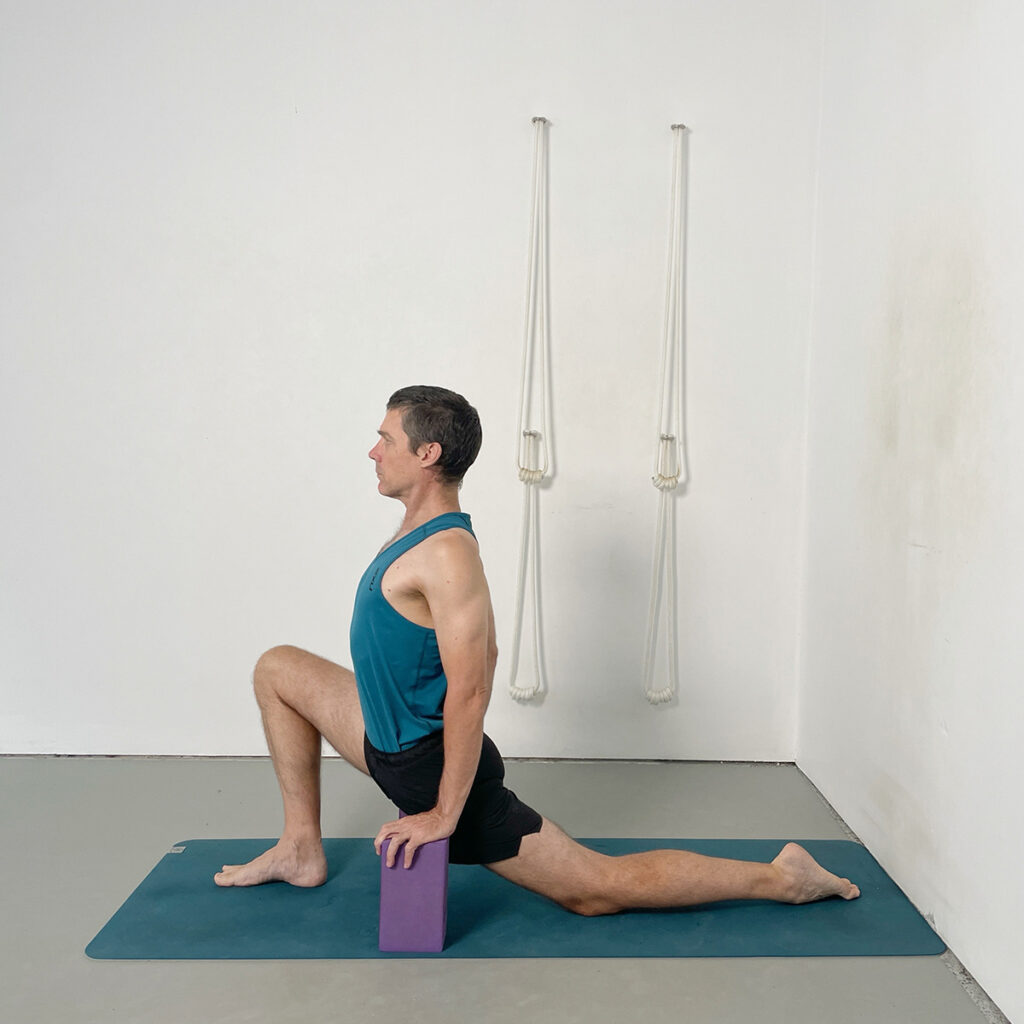
This lunging variation of Eka Pada Rajakapotasana focuses on releasing the hip flexors of the back leg, an area that commonly becomes tight from prolonged sitting. By lowering the back knee to the floor and allowing the pelvis to move forward and downward, the pose creates a deep opening through the front of the hip and upper thigh. Supporting the hands on blocks allows the body weight to be partially taken through the arms so that the hips can release more gradually and comfortably into the pose.
Key Instructions
• Step the front foot forward into a wide lunge stance, similar in distance to Parsvakonasana.
• Place two blocks beside the front foot.
• Bend the front knee and lower the back knee to the floor.
• Support your body weight through the hands on the blocks as the hips move forward and down.
• Allow the front knee to move slightly forward of the ankle, keeping the big toe base grounded.
• Gradually release the quadriceps of the front leg, softening from the knee toward the groin crease.
• Soften the contact of the back knee with the floor, avoiding pressing the knee down.
• Release the muscles at the front of the back hip, allowing the pelvis to descend further.
• Walk the blocks slightly back so they align closer to the hips, then roll the shoulders back and lift the chest.
• Maintain the forward movement of the hips while the chest lifts to deepen the opening through the front of the back hip and thigh.
3. Gomukhasana Preparation (Cow Face Pose – Hip Stretch)
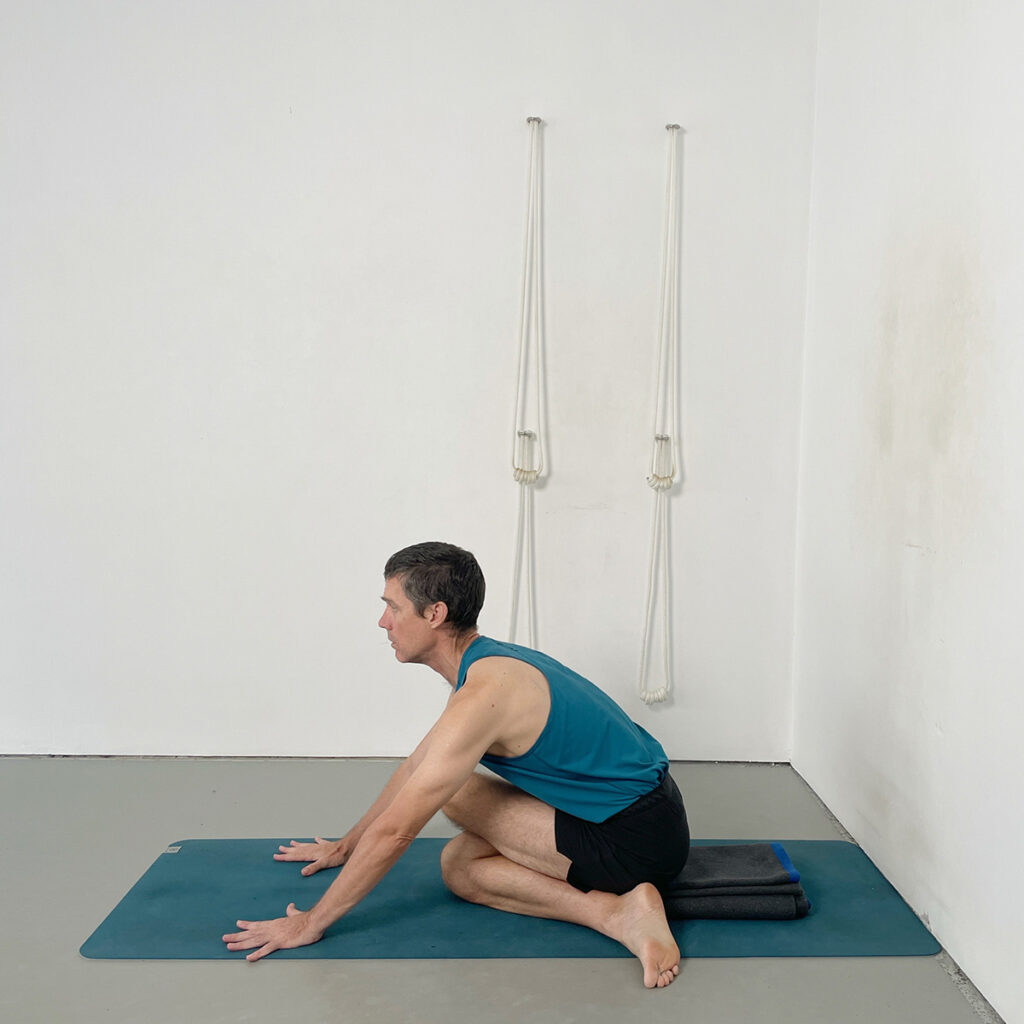
This preparatory variation of Gomukhasana provides a deep stretch for the outer hips and gluteal muscles. In the pose the legs are crossed so that the knees stack one directly above the other, creating a strong internal rotation of the hips. This action lengthens the gluteal muscles, particularly on the side of the top leg, helping to release tightness around the back of the hips. Sitting on a folded blanket helps to make the pose more accessible for people practicing with tight hips.
Key Instructions
• Sit on a folded blanket with the knees bent and feet together.
• Slide one leg underneath the other, bringing the heel beside the opposite hip.
• Lift the other leg over the top so that the knees stack one directly above the other.
• Turn the soles of both feet upward and the tops of the feet toward the floor.
• Work to bring both sitting bones evenly onto the blanket, particularly the sitting bone of the top leg side.
• If the stretch in the outer hip is already strong, remain upright and allow the muscles around the hip to gradually soften.
• To deepen the pose, walk the hands forward while keeping the spine long and the chest lifted.
• Keep the sitting bones grounded as the torso moves forward to increase the stretch through the outer hip and gluteal muscles of the top leg.
4. Malasana (Supported Squat for Inner Groins)
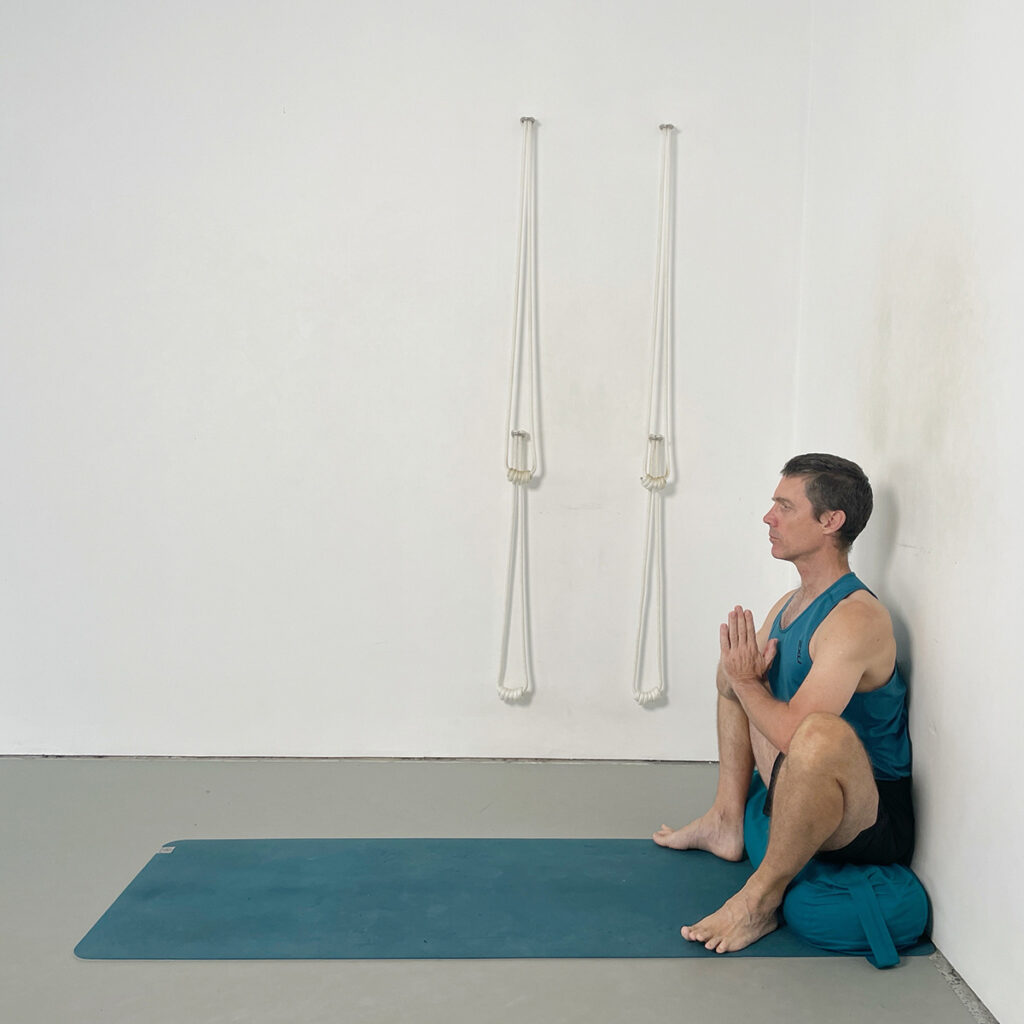
This supported variation of Malasana provides a deep opening through the inner groins and adductor muscles. By squatting with the pelvis supported on a bolster and the back of the pelvis against the wall, the body can gradually release into the pose without excessive strain. The elbows press the knees apart while the inner feet remain grounded, helping to lengthen the muscles along the inner thighs and create space through the hip joints.
Key Instructions
• Place a bolster against the wall and stand with the feet wide apart, approximately the width of the mat.
• Lean the back of the pelvis and shoulders against the wall with the backs of the heels touching the bolster.
• Turn the feet outward so the toes point diagonally away from the body.
• Keeping the heels grounded, bend the knees and slide down the wall until the hips rest on the bolster.
• Bring the hands together at the chest and place the elbows against the inner knees.
• Press the big toe bases and inner heels firmly into the floor to anchor the feet.
• Use the elbows to gently press the knees apart, creating space through the inner groins.
• Roll the shoulders back and lift the chest upward while maintaining the widening action of the knees.
5. Baddha Konasana (Bound Angle Pose)
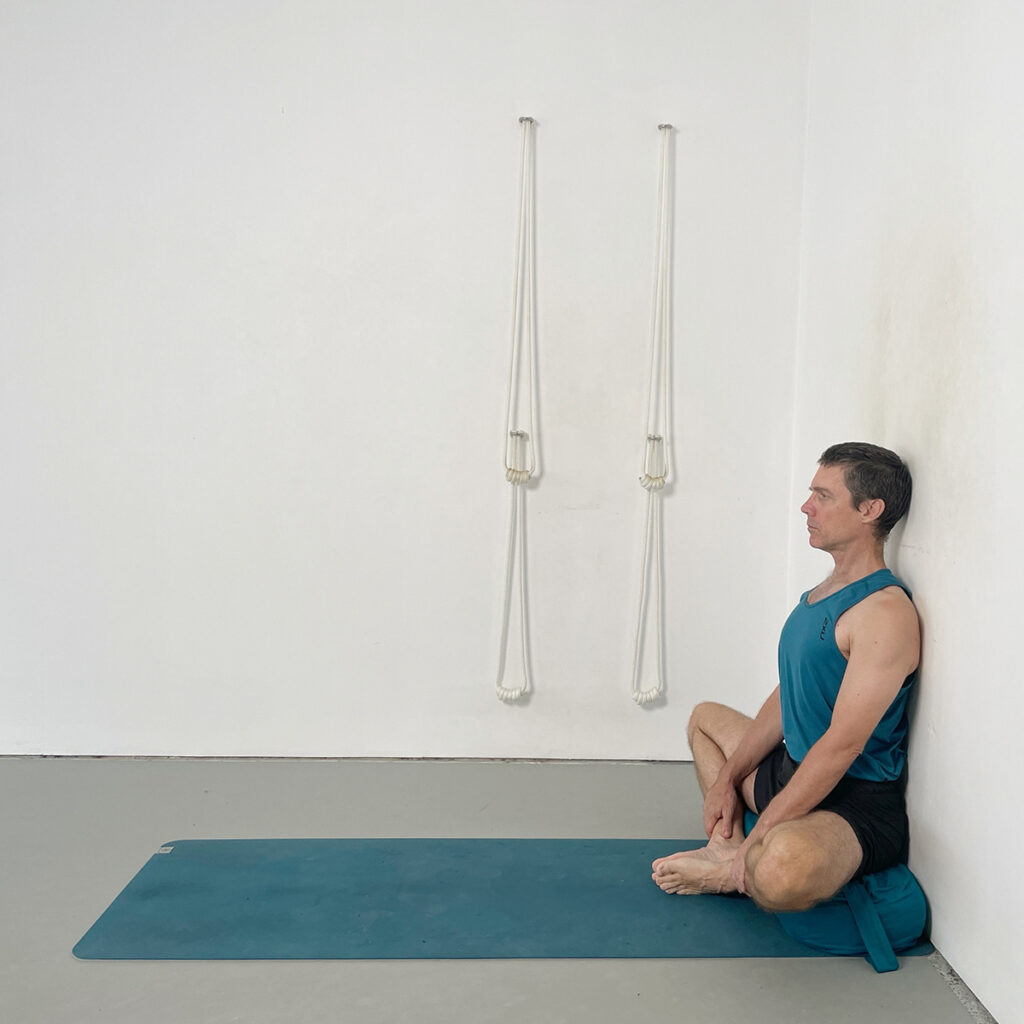
Baddha Konasana is a classic seated pose for improving mobility in the hips and inner groins. With the soles of the feet together and the knees opening outward, the pose gently lengthens the adductor muscles along the inner thighs. Sitting on a bolster and using the wall for support helps people with stiff hips to maintain spinal lift and an open chest.
Key Instructions
• Sit on a bolster with the soles of the feet together and the knees opening outward.
• Draw the heels in toward the pelvis.
• Actively press the heels toward each other, encouraging the knees to descend toward the floor.
• Bring the hands to the shins or ankles and draw the shoulders back.
• Ground the front of the sitting bones into the bolster to support the lift of the lower back.
• Roll the shoulders back and lift the chest upward, maintaining an upright spine.
6. Upavistha Konasana (Wide-Angle Seated Pose)
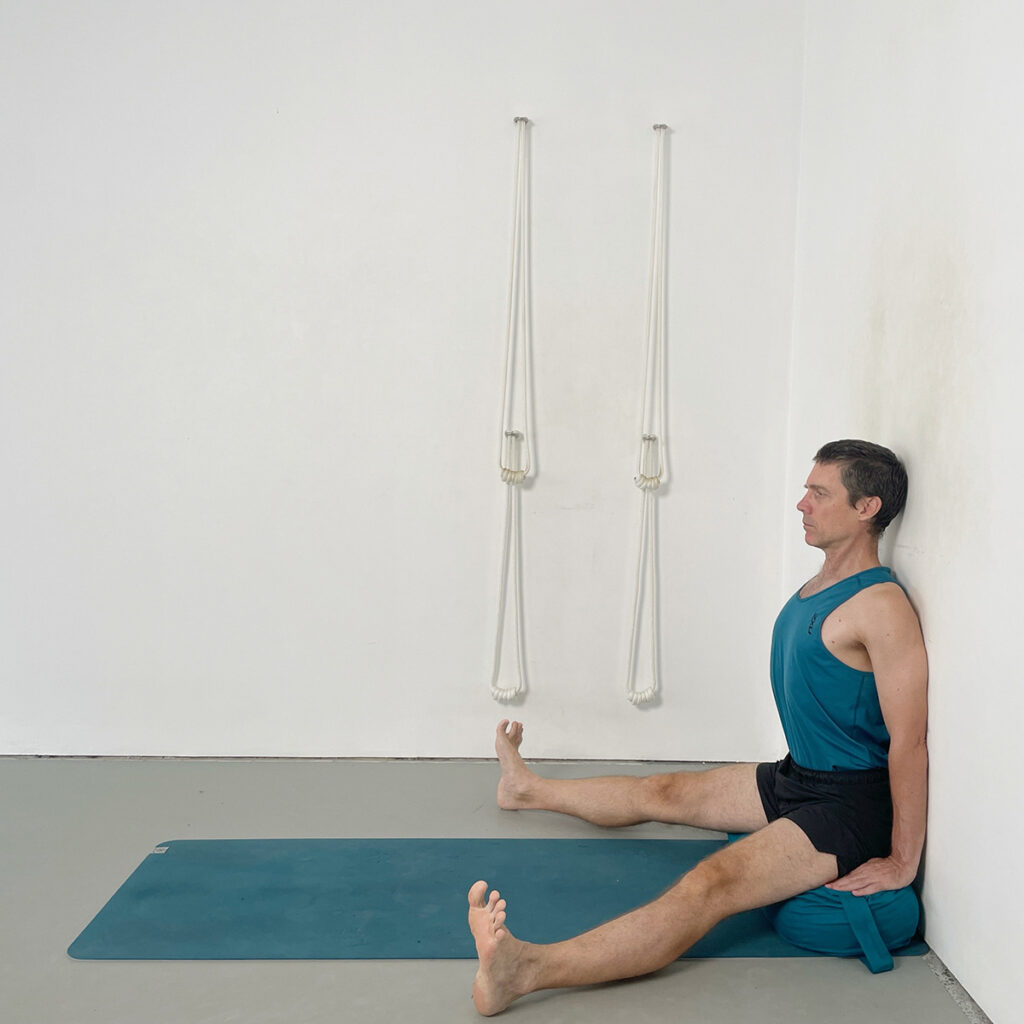
Upavistha Konasana is a wide-legged seated pose that stretches the inner thighs and adductor muscles. By extending the legs apart and grounding the backs of the thighs, the pose encourages the inner groins to release toward the floor. Sitting on a bolster with the pelvis supported against the wall helps maintain an upright spine so that the hips can open without overloading the muscles in the lower back.
Key Instructions
• Sit on a bolster with the legs extended wide apart, approximately the length of one leg or slightly wider.
• Adjust the pelvis so the back of the pelvis lightly contacts the wall.
• Press the backs of the knees firmly toward the floor to keep the legs straight.
• Extend the heels away from the body and activate the big toe bases.
• Roll the inner groins toward the floor.
• Press the upper thighs down toward the floor, especially the section of the thigh closer to the pelvis.
• Ground the front of the sitting bones into the bolster to support the lift of the lower back.
• Press the hands into the bolster, roll the shoulders back, and lift the chest upward.
7. Chair-Supported Pigeon Pose (Piriformis Stretch)
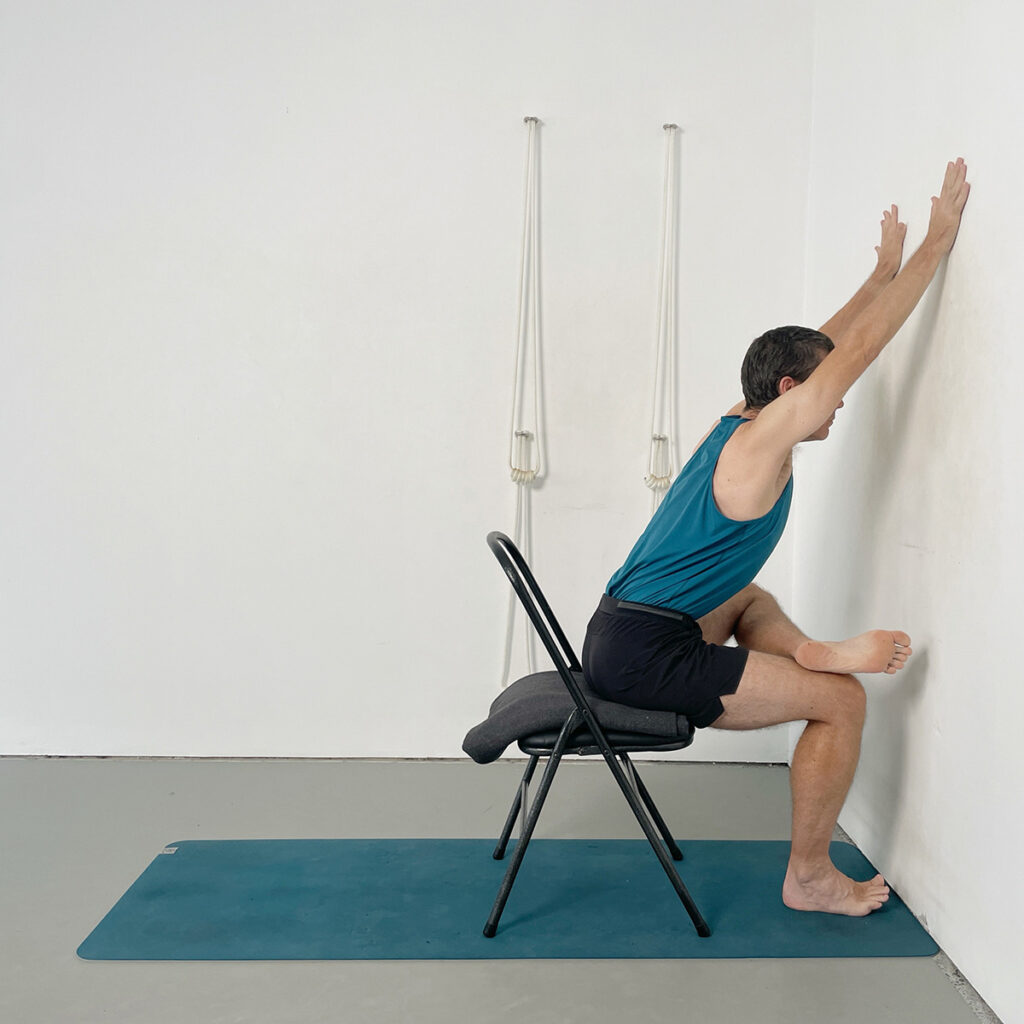
This chair-supported variation of Pigeon Pose provides a targeted stretch for the gluteal muscles and deep hip rotators, particularly the piriformis. By placing the ankle of one leg across the opposite thigh and maintaining an upright spine, the pose creates a controlled external rotation of the hip. The support of the chair allows the hips to remain stable while the spine lifts upward, helping to focus the stretch into the back of the hip.
Key Instructions
• Sit on a chair with the hips slightly higher than the knees and the feet flat on the floor.
• Place the outer ankle of one leg onto the opposite thigh, close to the knee.
• Position the shin so it remains parallel to the wall in front of you.
• Flex the foot of the lifted leg to protect the knee joint.
• Use the hands to rotate the thigh outward, lifting the inner thigh and turning the outer thigh downward.
• Press the hands onto the chair to lift the spine and chest upward.
• Keep the lifted foot active while allowing the knee to relax downward.
• Walk the hands up the wall in front of you, maintaining a long spine and upright posture.
• Keep the pelvis steady while the stretch develops through the back of the hip and gluteal muscles.
8. Reclining Figure Four Pose (Supine Piriformis Stretch)
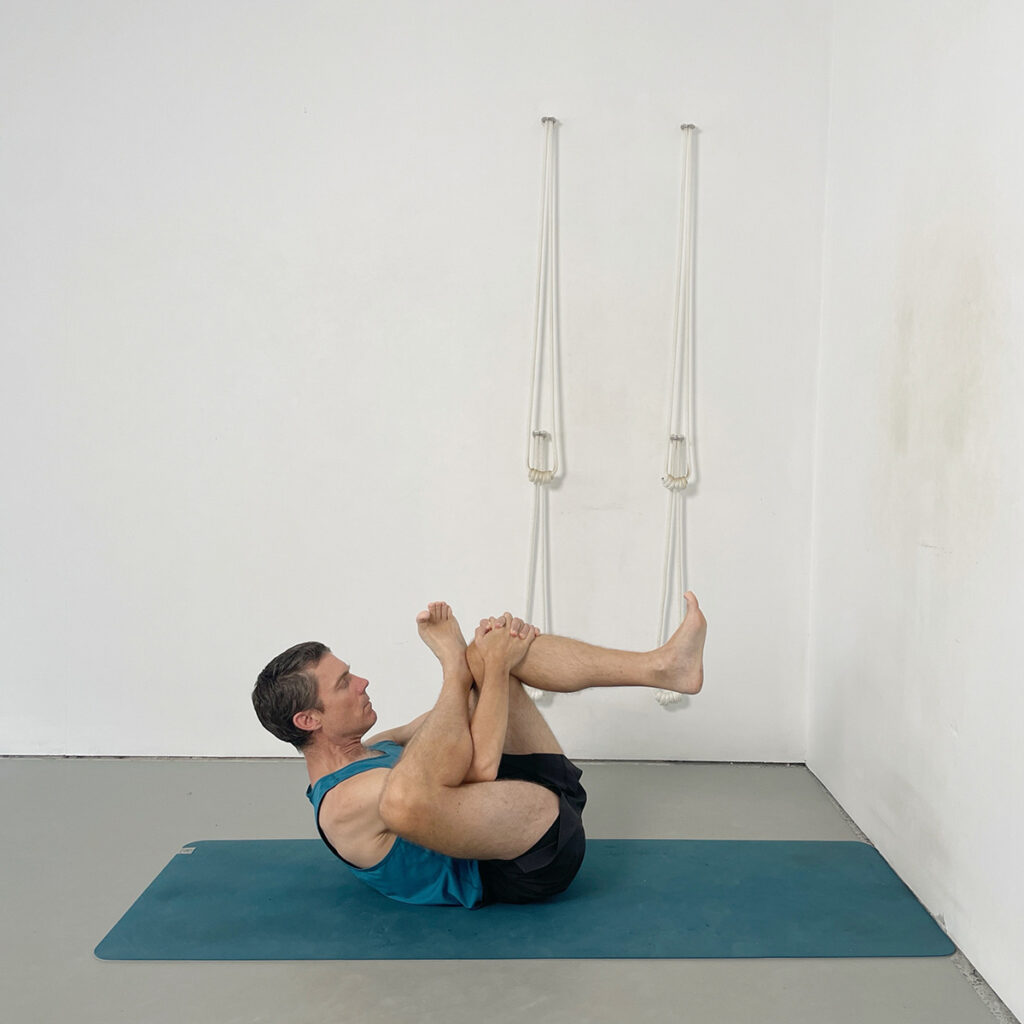
This reclining variation provides a gentle but effective stretch for the gluteal muscles and deep hip rotators, particularly the piriformis. By crossing one ankle over the opposite thigh and drawing the legs toward the chest, the pose creates a controlled external rotation in the hip while the back remains supported on the floor. This supported position allows the muscles around the hip to gradually release without placing strain on the lower back.
Key Instructions
• Lie on your back and bend both knees so they remain directly above the hips.
• Place the outer ankle of one leg across the opposite thigh, just below the knee.
• Flex the lifted foot to protect the knee joint.
• Lift the head slightly and thread one arm through the space between the legs.
• Wrap the other arm around the outside of the supporting leg and interlock the fingers behind the shin.
• Bend the elbows to draw the legs closer toward the chest.
• Allow the elbow of the lifted leg to gently guide the knee away from the shoulder, directing the stretch into the hip.
• Keep the outer hip of the lifted leg moving away from the body as the stretch develops.
9. Eka Pada Rajakapotasana (Pigeon Pose)
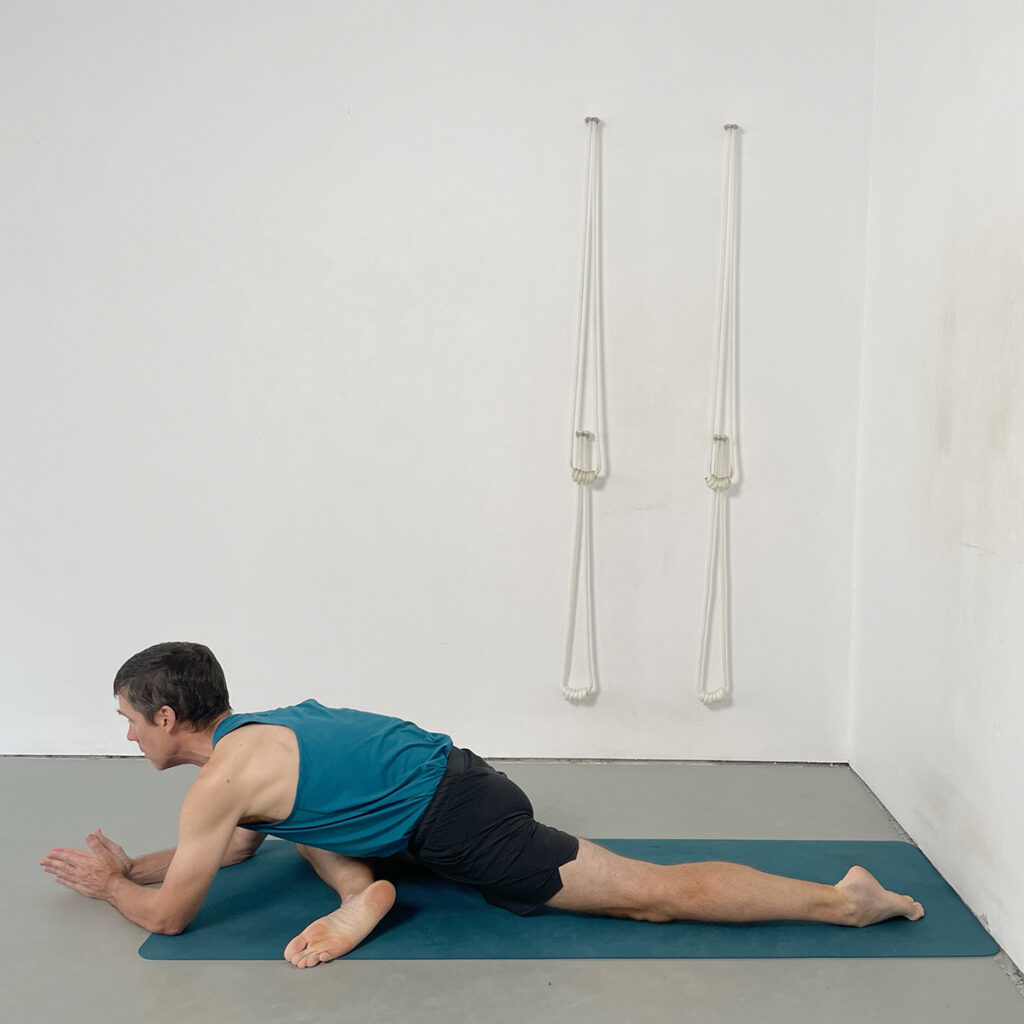
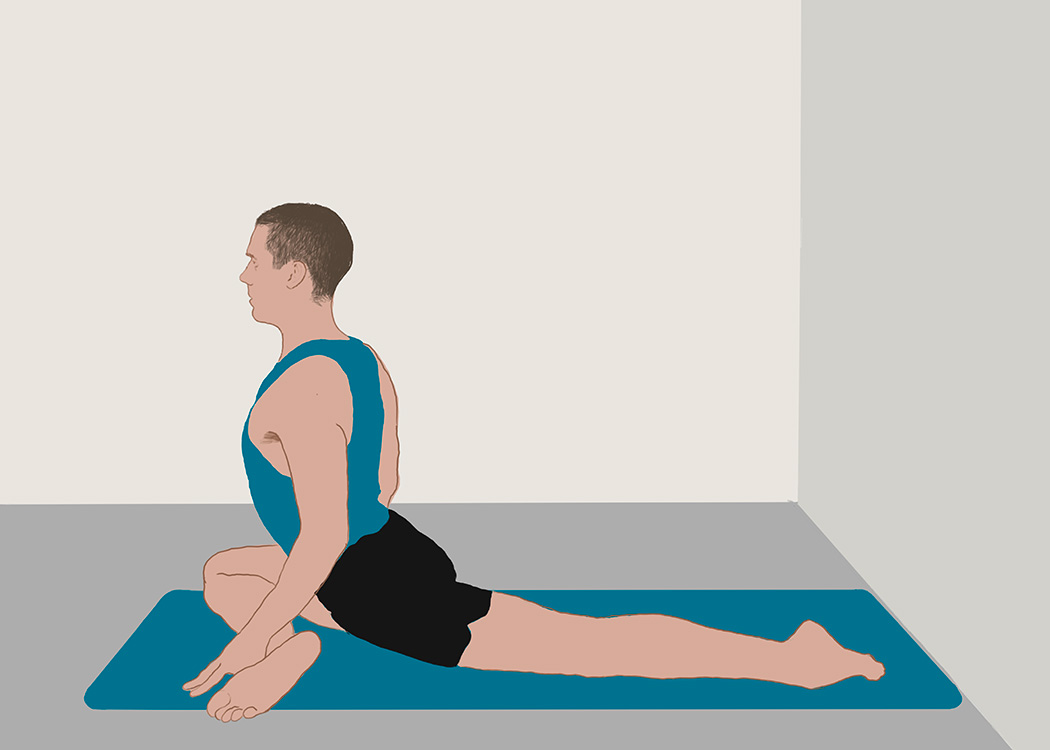
Eka Pada Rajakapotasana is a classic yoga pose for opening the hips and releasing tension in the gluteal muscles and deep hip rotators. In this variation of the pose the front leg rotates outward while the back leg extends behind the body, creating a strong stretch through the outer hip and buttock of the front leg while also lengthening the hip flexors of the back leg. Using a folded blanket beneath the sitting bone helps support the pelvis so that both sides of the hips can descend evenly as the pose develops.
Key Instructions
• Begin from Downward Facing Dog and bring one knee forward toward the front of the mat.
• Position the front shin diagonally across the mat, roughly at a 45° angle.
• Extend the back leg straight behind, resting on the top of the foot.
• Place the hands beside the hips and support your body weight with the arms as the hips descend.
• If the front sitting bone does not comfortably reach the floor, place a folded blanket beneath the hip for support.
• Allow both hips to descend evenly toward the floor, avoiding lifting one side of the pelvis.
• Soften the contact of both knees with the floor so the hips can release gradually.
• Remain upright or lower the forearms to the floor beneath the shoulders.
• Maintain the length of the spine while allowing the stretch to develop through the outer hip and gluteal muscles of the front leg.
Improve Hip Mobility with Structured Iyengar Yoga
Continue your hip mobility journey with the full Yoga for Hips course.
These carefully structured classes help you release tight hips, improve flexibility, and restore balanced movement through the pelvis and legs with clear, methodical instruction.
Your membership includes full access to this course, over 900 on-demand classes, and Yoga Selection’s complete library of structured yoga courses.
Clear Instruction. Intelligent Sequencing. Iyengar Yoga for Every Body.
Want to Go Further? A Complete Yoga Course for Hip Mobility
If you would like to develop your hip mobility further, the Yoga Selection Yoga for Hips course provides a structured series of classes designed to progressively improve flexibility and strength around the hip joints.
The course includes ten carefully sequenced classes that work with several important muscle groups around the hips, including the adductors, gluteals, hip flexors, and deep hip rotators. Each class explores different aspects of hip mobility while also supporting healthy movement through the pelvis and lower back.
Class 1: Yoga for Hips

This introductory class provides a well-rounded sequence designed to improve mobility in tight hips. It works with key muscle groups including the adductors, gluteals, and hip flexors, helping to restore balanced movement through the pelvis and legs. The poses are approached progressively with options to support different levels of flexibility, making the class suitable for building a consistent and sustainable hip-opening practice.
Class 2: Glutes and Piriformis
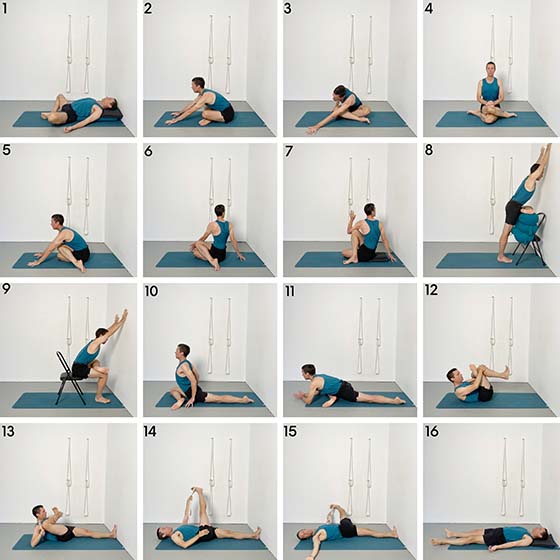
This class focuses on improving mobility in the gluteal muscles and piriformis, helping to release tension deep within the buttock region. Through a carefully selected sequence of poses, it works to both lengthen and soften these muscles, supporting more balanced hip function and improved ease in movement.
Particular attention is given to the piriformis, a deep hip stabiliser that can influence the sciatic nerve when tight. This makes the class especially beneficial for those experiencing tightness through the back of the hips, while also supporting progress in seated poses, forward bends, and overall hip mobility.
Class 3: Adductors
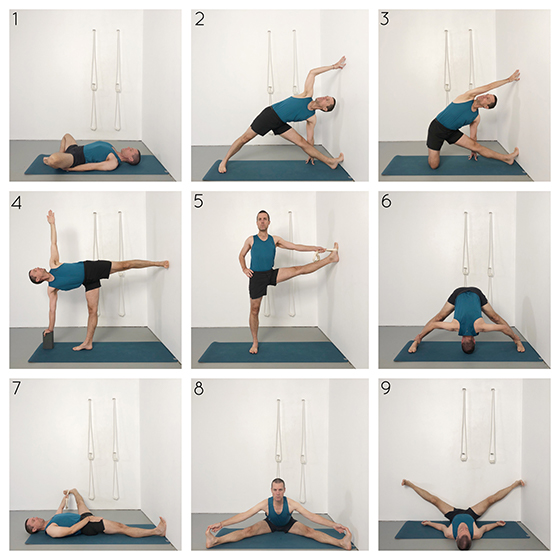
This class focuses on improving flexibility in the adductor muscles of the inner thighs, an area that commonly restricts hip mobility. Poses such as Trikonasana, Utthita Hasta Padangusthasana, Supta Padangusthasana, and Upavistha Konasana are used to lengthen the groins and develop greater freedom of movement in the hips. Releasing tightness in this region can make many standing poses and forward bends more accessible in your yoga practice.
Class 4: Reclining Yoga Poses
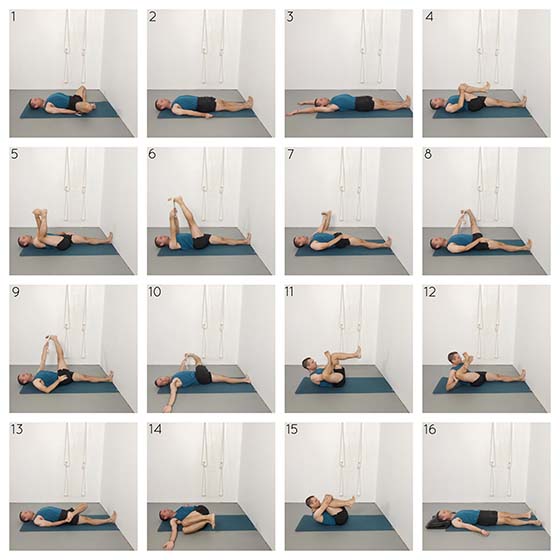
This class features a complete sequence practiced from a reclining position, allowing the hips and lower back to release without placing weight through the legs. The poses are based around Supta Padangusthasana and its variations, which help improve mobility in the hips, hamstrings, and outer thighs while supporting the spine. This gentle approach can be particularly beneficial
Class 5: Yoga for Tight Hip Flexors
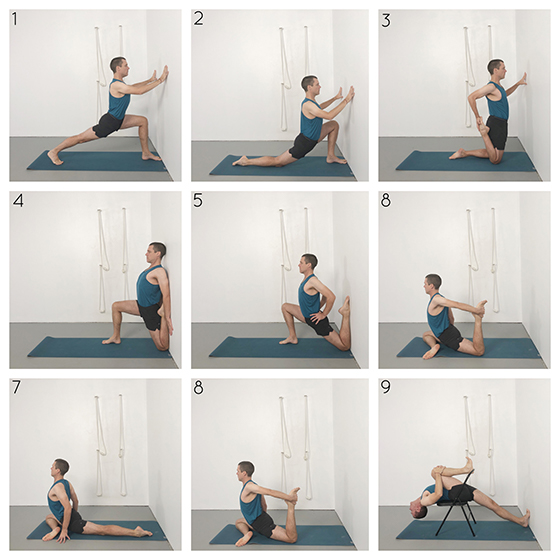
This class focuses on releasing tightness in the hip flexor muscles, which connect the legs to the torso and play a key role in posture and movement. Through a concise sequence of poses, it helps to lengthen shortened muscles often associated with prolonged sitting, while also improving mobility in the quadriceps and front of the hips.
By restoring balance to this region, the class can support better pelvic alignment and spinal posture, making it particularly beneficial for those with sedentary routines, as well as runners and athletes looking to maintain healthy hip function.
Class 6: Yoga for the Gluteals
This class focuses on improving mobility in the gluteal muscles, an important muscle group that supports strength and stability throughout the hips and pelvis. The sequence includes poses that help release tightness in the buttock region while encouraging more balanced movement through the hips and legs. Improving flexibility in the gluteals can be beneficial for conditions such as hip bursitis and can also help make forward bends more accessible in your yoga practice.
Class 7: Vinyasa Hips and Twists
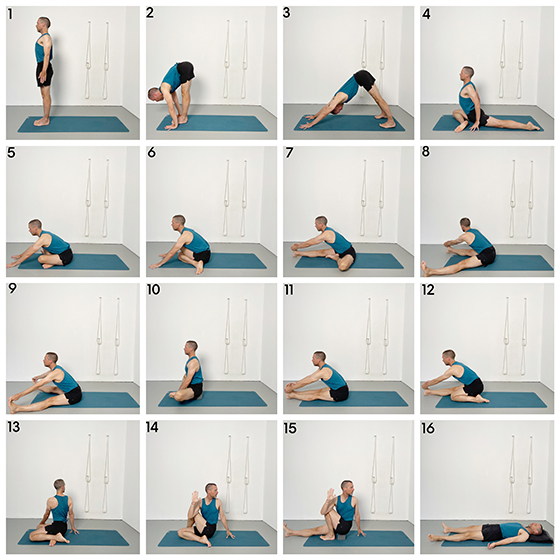
This dynamic class explores forward bends and twists within a flowing vinyasa-style sequence, allowing the hips and spine to move through a series of connected poses. Repeated transitions between poses such as Uttanasana, Adho Mukha Svanasana, and Eka Pada Rajakapotasana help release tension in the gluteals while encouraging greater mobility through the hips and back. The continuous movement brings energy and lightness to the practice while helping to gradually work through stiffness in the body.
Class 8: Yoga for the Piriformis Muscle
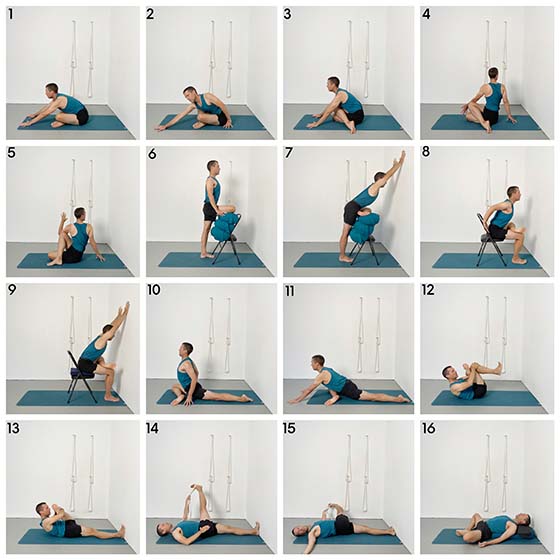
This class explores a selection of poses designed to release the piriformis, a small muscle located deep in the buttock that helps rotate and stabilise the hip joint. Tightness in this area can sometimes contribute to sciatic-type discomfort, making it an important region to address when working with hip mobility. The sequence also works with surrounding muscles of the hips and outer thighs to help create a more balanced and effective release through the back of the hips.
Class 9: Legs and Pelvis Mobility
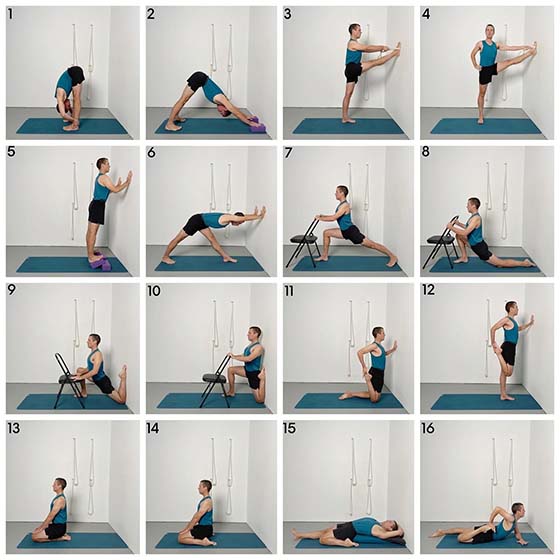
This longer practice works systematically through the major muscle groups of the legs and hips, including the calves, quadriceps, hip flexors, hamstrings, adductors, shins, and gluteals. Each pose is approached progressively with options that make the sequence accessible for practitioners with different levels of mobility. Improving flexibility and strength in these areas can help consolidate familiar poses while gradually making more demanding yoga postures easier to approach.
Class 10: Padmasana (Lotus Pose)
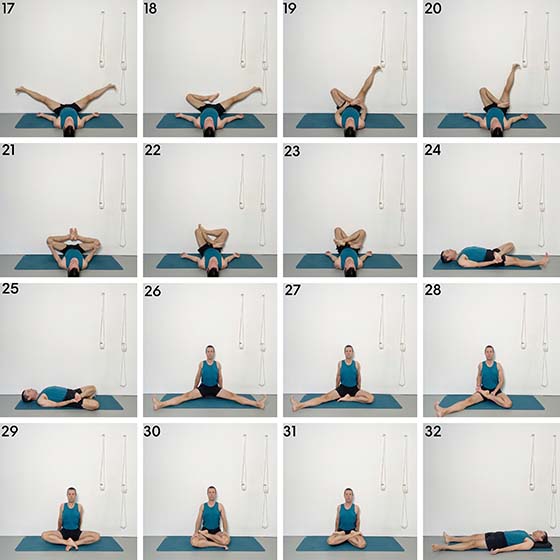
This class explores a progressive approach to Padmasana (Lotus Pose), focusing on the hip mobility required to practice the pose safely. Preparatory poses such as Sukhasana, Baddha Konasana, and Janu Sirsasana gradually develop the external rotation of the hips that is essential for Lotus. The sequence introduces the pose in supported variations before progressing toward the fuller expression, helping practitioners improve flexibility in the hips while protecting the knees and ankles.
See the full Yoga For Hips 10-Part Course here:
Tight hips are often closely connected to other areas of discomfort in the body, particularly the lower back and the region around the sciatic nerve. If you are working with related issues, you may find it helpful to explore our guides on Yoga for Sciatica Relief, Iyengar Yoga for Lower Back Pain, and Yoga for Improving Posture, which further develop the relationship between the hips, pelvis, and spine.
Frequently Asked Questions – Yoga For Tight Hips
Why do hips become tight?
Tight hips are often the result of prolonged sitting, limited movement, or repetitive daily habits that keep the hip joints in a shortened position. Over time this can cause the surrounding muscles—such as the hip flexors, gluteals, and inner thighs—to lose mobility. Practicing yoga poses that gently lengthen these muscles can help restore balanced movement through the hips and pelvis.
Can yoga help improve hip mobility?
Yes. Yoga includes a wide range of poses that work with the muscles surrounding the hip joints, including the adductors, hip flexors, gluteals, and deep hip rotators. Practiced regularly, these poses can gradually improve flexibility while also strengthening and stabilising the hips.
How often should I practice yoga for tight hips?
Consistency is more important than intensity. Practicing hip-opening yoga poses two to three times per week can help maintain mobility and prevent stiffness from returning. Short, focused sequences like the class featured above can be particularly effective when practiced regularly.
Which yoga poses are best for tight hips?
Many yoga poses can help improve hip mobility. Some of the most effective include Parsvakonasana (Extended Side Angle Pose), Baddha Konasana (Bound Angle Pose), Upavistha Konasana (Wide-Angle Seated Pose), and Eka Pada Rajakapotasana (Pigeon Pose). These poses work with different muscle groups around the hips to gradually increase flexibility.
Is yoga for tight hips suitable for beginners?
Yes. Many hip-opening poses can be adapted to suit different levels of flexibility. Using props such as blocks, blankets, chairs, or bolsters can make the poses more accessible and help support the body while the hips gradually release.
Can tight hips cause lower back discomfort?
Tightness in the hips can sometimes affect the way the pelvis and spine move during everyday activities. When the hips are restricted, the lower back may compensate by moving more than it should. Improving hip mobility through yoga can help distribute movement more evenly through the pelvis, hips, and spine.
Can yoga help relieve piriformis tightness?
Yes. Several yoga poses specifically target the piriformis and surrounding gluteal muscles, which can become tight from prolonged sitting or repetitive movement. Releasing tension in this area may help reduce discomfort in the buttock region and improve overall hip mobility.
How long does it take to loosen tight hips with yoga?
Improvements in hip mobility can often be noticed within a few weeks of regular practice. However, long-standing stiffness may take longer to change. Practicing consistently and approaching the poses gradually will usually lead to steady improvements over time.
Continue Developing Your Hip Mobility
Improving hip mobility is not about forcing flexibility, but about working consistently with the muscles that influence movement around the pelvis. The poses in this sequence provide a practical starting point for releasing tight hips and restoring more balanced movement through the body.
By practicing these poses regularly, you can gradually improve flexibility in the adductors, gluteals, hip flexors, and deep hip rotators, while also supporting the health of your lower back and knees. Even a short, focused sequence like this can make a noticeable difference when approached with patience and consistency.
If you would like to take this work further, the Yoga for Hips course expands on these ideas across ten carefully structured classes. Together, they provide a progressive approach to developing strength, mobility, and stability in the hips.
Practice with Yoga Selection
A Yoga Selection membership gives you full access to over 900 on-demand classes and a comprehensive library of structured courses. New classes are added each week, providing ongoing guidance to support your practice at every stage.
With clear instruction and carefully sequenced classes, you can continue to build a consistent and sustainable yoga practice from home.
Improve Hip Mobility with Structured Iyengar Yoga
Continue your hip mobility journey with the full Yoga for Hips course.
These carefully structured classes help you release tight hips, improve flexibility, and restore balanced movement through the pelvis and legs with clear, methodical instruction.
Your membership includes full access to this course, over 900 on-demand classes, and Yoga Selection’s complete library of structured yoga courses.
Clear Instruction. Intelligent Sequencing. Iyengar Yoga for Every Body.
Continue Exploring with Yoga Selection
- → Iyengar Yoga for Beginners – A structured starting point for building clarity and confidence.
- → Yoga at Home – Establish a steady, sustainable home practice.
- → Yoga for Stiff Bodies – Supported sequences designed to improve mobility safely.
- → Iyengar Yoga for Back Care – Develop strength and stability to support spinal health.
Share:
Rod Stennard – Founder of Yoga Selection
Rod Stennard is the founder of Yoga Selection, the first online yoga platform dedicated entirely to Iyengar Yoga. A certified Iyengar Yoga teacher since 2002, Rod has practiced yoga since 1992 and studied under senior teachers from around the world, including members of the Iyengar family in Pune, India.
Rod launched Yoga Selection in 2016 to bring structured, high-quality Iyengar Yoga training to a global audience. As a pioneer in the field of online yoga education, he is passionate about making this method accessible to all, through rigorous, inclusive, and thoughtfully designed classes. His work continues to support students of all levels in over 50 countries.